Electric boiler
Convert low-carbon electricity into competitively priced heat with an e-boiler. Newheat develops, builds and operates your power-to-heat, from design to operation.
solution
What is an e-boiler ?
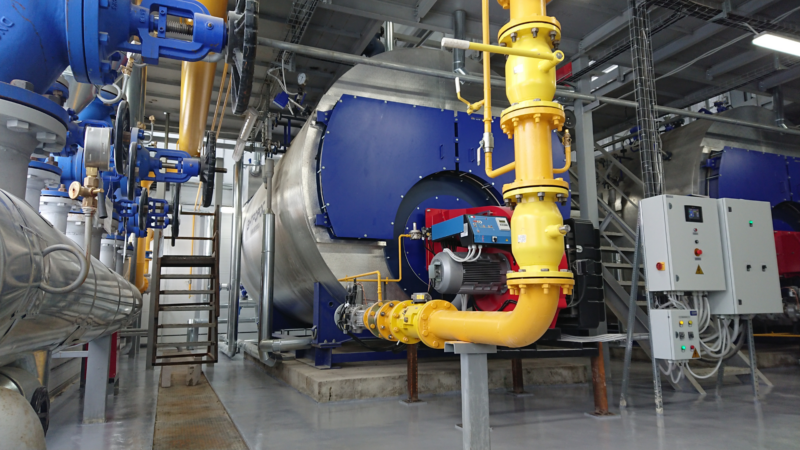
An e-boiler, or electric boiler, converts electricity into heat to produce hot water, hot air or steam. It is the most direct technology for electrifying heat production: no combustion, no on-site CO₂ emissions.
This electricity-to-heat conversion, known as power-to-heat, enables the use of low-carbon electricity available on the grid to produce competitively priced heat, as a substitute for gas or fuel oil.
How does an e-boiler work ?
Electricity powers heating elements submerged in water, which directly heat the fluid or air to the required temperature. Unlike a heat pump, the e-boiler can produce very high temperatures and high power output, with virtually instantaneous response.
When combined with thermal storage, the e-boiler can concentrate its energy consumption during the hours when electricity is cheapest, whilst ensuring a continuous supply of heat.
When should you use an e-boiler?
Whenever you need heat at medium to high temperatures, or are looking for a power-to-heat solution that is quick to deploy and easy to integrate. The e-boiler is particularly well-suited to sites with a sufficient electricity supply and temperature requirements that other renewable technologies cannot meet on their own. It can be deployed from 1 to over 20 MW, either as a base load or to supplement another renewable heat source.
CUSTOMER BENEFITS
What you gain from integrating an e-boiler

Decarbonising your heat production
The e-boiler produces almost carbon-free heat, thanks to the French electricity mix, one of the lowest-carbon in Europe. The impact can be directly accounted for in your Scope 1 emissions reports.

Reduce your heating costs
The e-boiler generates heat only when electricity prices are low. Its capital and maintenance costs are low. The result: a competitive heat price, with limited CAPEX.

Meeting high-temperature requirements
The e-boiler produces heat at medium or high temperatures and under pressure, to meet the most demanding requirements of your process.
Accessing electricity flexibility mechanisms
When combined with thermal storage and a control system, the e-boiler can contribute to the electricity grid’s load shedding and frequency regulation (secondary reserve) mechanisms, generating additional revenue.
Does your process require high-temperature heat or steam ?
The e-boiler meets needs that other renewable technologies cannot fulfil on their own. We support you in managing your heating costs and implementing power-to-heat solutions as a replacement for fossil fuels.
NEWHEAT’S SUPPORT
Newheat integrates an electric boiler into your system
Newheat develops, designs, finances and operates electric boilers for industrial sites and district heating networks, either on their own or in combination with other technologies to maximise low-carbon heat production at your site. We’re there when you need us, from design through to operation.

Audit and sizing
We analyse your heating requirements, your electricity connection and your consumption profile to determine the most suitable solution.

Design and implementation
We design and install your system with performance commitments set out in the contract from the moment it is signed.

Monitoring, operation and maintenance
We deploy and operate the energy monitoring and management systems that control your electricity consumption in real time and monitor the installation throughout the contract period. You receive low-carbon heat without having to manage the system.
Let’s assess the decarbonisation potential of your site or your district heating network
Newheat provides you with renewable heat that is cheaper than your current solution, with a price indexed to the market of your choice: electricity, biomass or a sectoral index. This allows you to maintain control over your costs and competitiveness. We can assist at whatever stage you need, from development through to the operation of the installation.