- Posts
- Renewable heat
Moving towards sustainable mining using renewable energy
Pierre Delmas
Copper and lithium mines play a vital role in the global energy transition. Copper transports energy through cables, motors and electrical grids, while lithium stores it in batteries that power electric vehicles, computers and storage systems.
Global demand is skyrocketing, and Chile is the world’s leading producer of copper and one of the largest producers of lithium. However, the extraction and processing of these elements still rely heavily on fossil fuels, resulting in a high carbon footprint.
Why talk about renewable energy in the mining sector?
The context of mining in Chile
Chile is the world’s leading copper producer (24% of global production) [1] and holds more than 30% of the world’s lithium reserves [2], minerals that are essential to the global energy transition. Copper is used in electrical cables, transport networks and renewable technologies, while lithium is essential for electric vehicle batteries and solar and wind energy storage.
The mining sector accounts for around 12% of Chile’s GDP and 60% of its total exports, making it a fundamental pillar of the national economy [3].
However, extracting and processing these minerals requires high amounts of heat, which is still mainly produced from fossil fuels. Mining in Chile consumes around 55 TWh of energy per year, 51% of which is electricity and 49% heat [4], with the latter largely covered by diesel and natural gas.
As a result, the mining sector generates around 7% of the country’s greenhouse gas (GHG) emissions, with 7.9 MtCO₂e direct emissions in 2022, mainly related to the use of fuels in boilers, thermal processes and transport
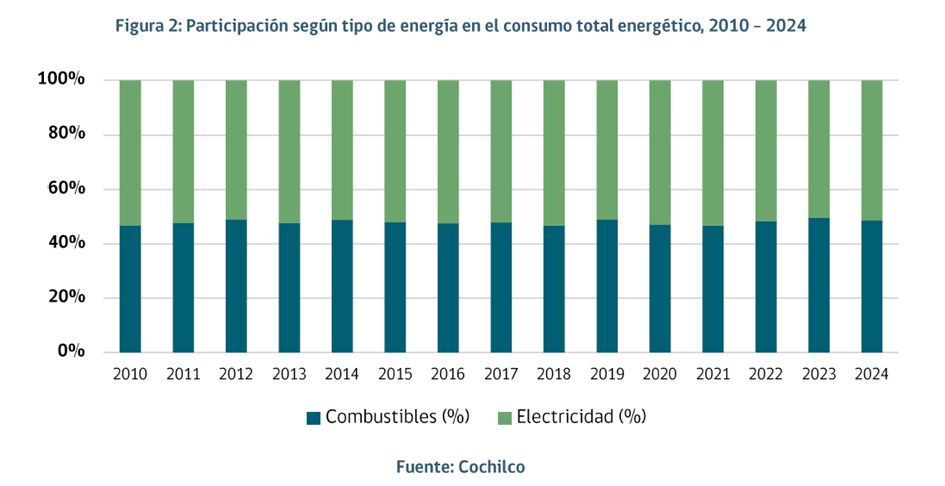
Share of electricity and heat in total energy consumption, 2010–2024. Source: Cochilco
Renewable energy to decarbonise mines
Mining companies are aware of the climate challenge and have all made strong commitments to sustainability for the coming years.
Chile has committed to reducing its emissions by 30% by 2030 compared to 2007 and to achieving carbon neutrality by 2050, with a sectorial roadmap that aims for 70% renewable energy in the energy mix by 2030 and a gradual reduction in emissions in the mining sector [5].
In this context, the Chilean mining industry must accelerate the decarbonation of its processes to strengthen its competitiveness in an international market where demand for low-carbon copper and lithium is growing rapidly.
Barriers to decarbonation in the mining industry
Behind the energy challenge lie significant economic and technical obstacles, which explain why decarbonising mines remains complex:
- The need for significant CAPEX investments to improve energy efficiency by integrating heat recovery systems and renewable heat technologies.
- The need to modernise thermal technologies and equipment: many sites use low-efficiency diesel or gas boilers without waste heat recovery systems. In addition, some do not have thermal demand control, which leads to oversizing and overconsumption.
- Limited government support, mainly focused on electrification and power purchase agreements (PPAs), with few concrete measures to accelerate the decarbonation of heating.
However, heat production from fossil fuels is very costly and highly exposed to the volatility of international diesel and natural gas prices.
Renewable heat is a clean and reliable alternative to fossil fuels, capable of significantly reducing CO2 emissions and improving the sector’s competitiveness.
Solutions for decarbonising mines: electrification and renewable heat
The sector has already made significant progress in terms of electrification, especially through the signing of renewable energy purchase agreements (solar and wind power) that reduce the cost of this energy. However, decarbonising heating needs remains one of the main challenges to be addressed.
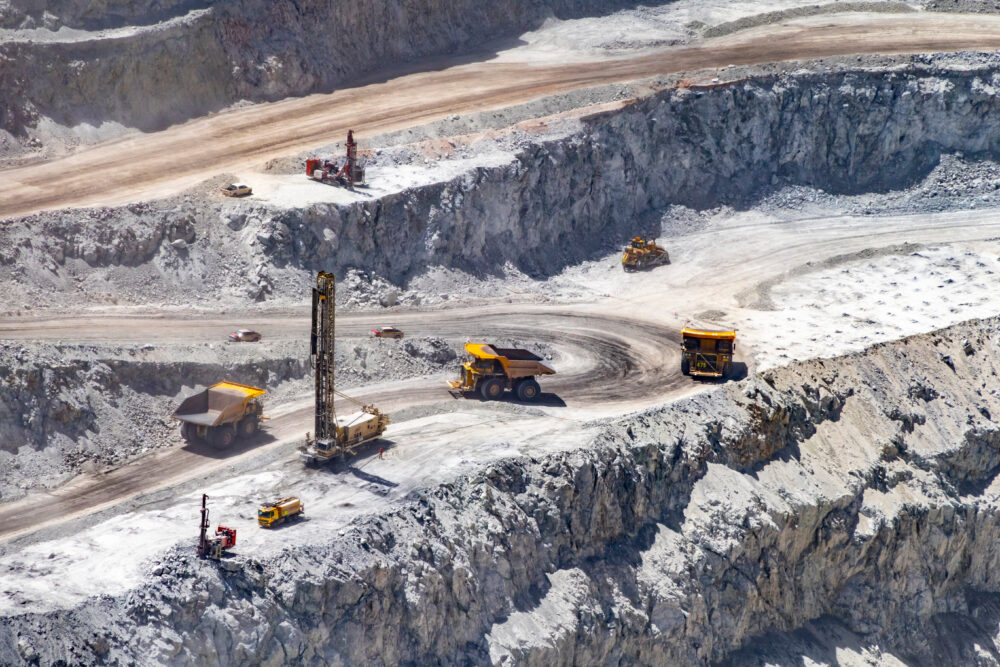
Energy consumption in mining varies depending on the stage of the extraction process. Open-pit mines account for the largest share of fuel consumption:
- Concentration processes consume 16.29 TWh, or 29% of total consumption. At this stage, electricity use clearly predominates (15.83 TWh), due to the high energy requirements of ore crushing and grinding operations.
- In the hydrometallurgical field, the SX-EW (leaching and electro-winning) process consumes 5.45 TWh (9.8% of the total). It also relies mainly on electricity (4.42 TWh), demonstrating the need for a continuous electricity supply, although it also requires fuels to operate.
- Finally, smelting combines the use of electricity and fuels, as thermal energy is essential to the process.
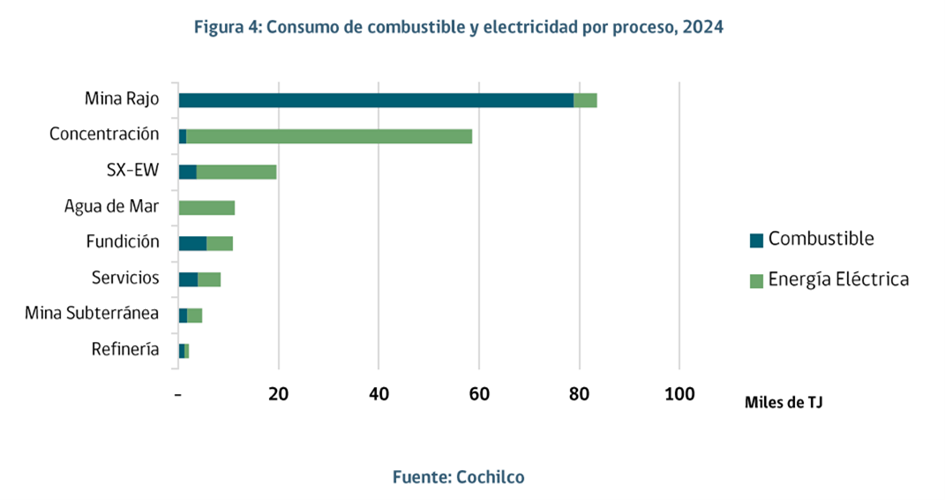
Heat and electricity consumption by process. Source Cochilco
Processes that can be decarbonised
Copper production involves several stages that consume a great deal of energy, both electrical and thermal.
The ore is first extracted, then crushed, ground and finally sorted. Depending on its nature (sulphide or oxide), there are two main processes for obtaining copper that is more than 99% pure.
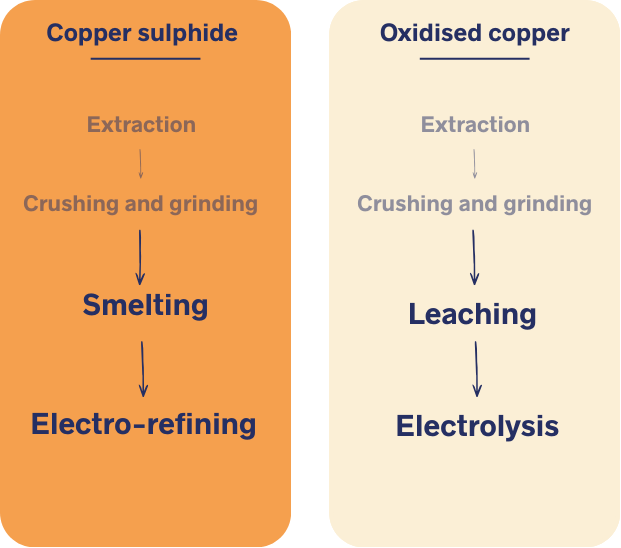
Steps in extracting copper according to its nature
Copper sulphide: smelting and electro-refining
In the case of sulphide ores, the first step involves high-temperature smelting in furnaces to separate the copper from impurities and obtain crude copper.
It is then purified by electrolytic refining.
This process involves immersing copper anodes in an electrolytic solution through which an electric current is passed. Under the effect of the current, the copper dissolves from the anode and deposits on the cathode, forming plates of very pure copper (up to 99.99%).
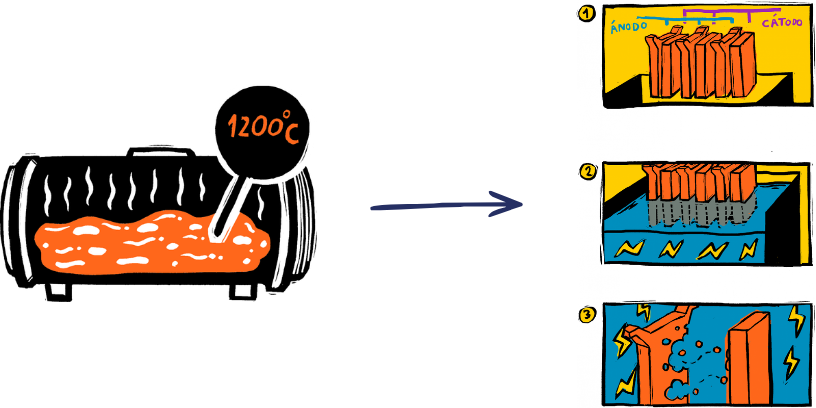
@codelcoeduca
In smelting and refining, thermal demand can exceed 200 MWt in large plants, where decarbonation and efficiency costs can be amortised in ~10 years depending on the solution applied.
Oxidised copper: leaching and electro-winning
In the case of oxidised ores, copper is extracted by leaching. The crushed ore is piled onto watertight platforms and then sprayed with an acid solution that dissolves the copper contained in the rock.
The enriched solution is then collected and sent to the electro-winning stage. This process, similar to electro-refining, allows copper to be recovered directly from the solution by depositing it on cathodes under the effect of an electric current.
For leaching to be effective, the solution must be maintained at an optimal temperature (generally between 40 and 60°C). Heat accelerates dissolution and improves yield. However, this requires a continuous source of thermal energy, which can reach tens to hundreds of megawatts of thermal energy (MWt) per site.
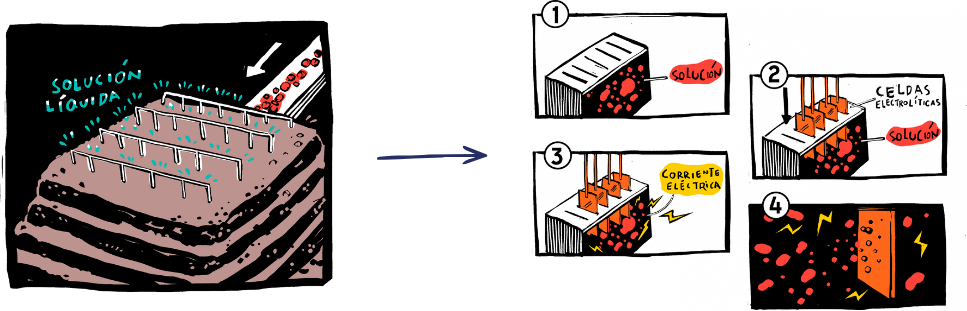
@codelcoeduca
Although they use electrical energy directly, pre-treatment, solution heating and sludge drying systems consume a significant amount of thermal energy.
Renewable heat supply solutions tailored to mining operations
Among the technologies to be integrated are:
 |
Large-scale solar thermal energy | It provides the heat needed to maintain leaching solutions at the required temperature (40-60°C) or to heat electrolytes in electro-winning and solutions in general. |
 |
Short- and long-term thermal storage systems | These allow the heat produced during the day to be stored and used at night or continuously, ensuring the stability of mining processes that operate 24 hours a day, 7 days a week. |
 |
Recovery of residual heat in processes | Usefull in processes such as smelting, which can reduce net heat consumption by more than 20%. |
 |
Industrial heat pumps | Ideal technologies for processes between 40 and 85 °C, recover low-temperature heat and raise it to a useful level. They enable fossil fuel heat to be replaced by high-efficiency renewable thermal energy. |
 |
Electric boilers | They are used for processes that can reach high temperatures. |
Faced with the challenges of the mining sector, Newheat, in collaboration with its recent joint venture Newheat Latam*, is positioning itself as a strategic partner for the decarbonisation of mines in Chile. The company offers large-scale renewable heat solutions, drawing on its expertise in the design, financing, construction and operation of decarbonised heat facilities. It offers a “heat as a service” model, with 15- to 20-year contracts and no initial investment required from the customer.
Newheat offers various integrated renewable heat supply technologies to ensure competitive costs, high robustness and continuous availability in processes such as leaching, electro-winning and general solution heating.
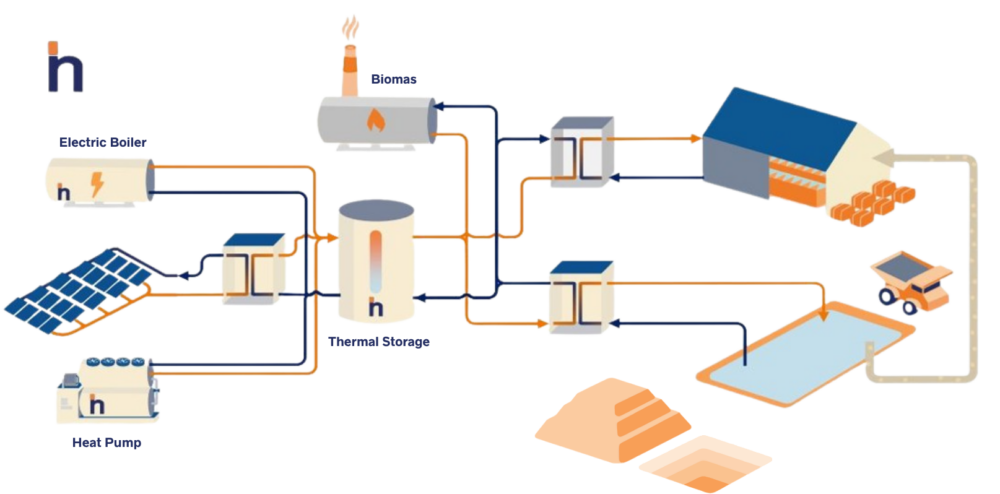
Newheat renewable heat supply solutions
*Newheat and Sunmark Chile have joined forces in a joint venture: Newheat’s innovation in modelling, designing and remotely operating renewable thermal plants and Sunmark’s international experience in large-scale industrial heating projects. Their goal is to decarbonise the copper and lithium mining industry on a large scale by offering reliable, competitive renewable heat supply solutions tailored to the specific needs of each site and industry.
Technical and economic benefits of renewable heat for mining
The use of renewable heat in mining operations with Newheat enables to:
- Reduce or eliminate CO₂ emissions in thermal processes when diesel or gas are completely replaced.
- Ensure competitive costs, even lower than those of fossil fuels in remote areas.
- Limit exposure to diesel price volatility by securing the cost of heat over the long term.
- Improve the carbon footprint of minerals, promoting their differentiation and value on the market (low-carbon copper and lithium).
- Integrate energy efficiency and control solutions to optimise consumption.
- Remove the CAPEX barrier through long-term heat supply contracts (HPA).
With this in mind, Newheat is supporting mines in Chile reduce their carbon footprint. Through our local joint venture, Newheat Latam, we are combining our experience and local knowledge to accelerate the decarbonation of the mining sector. We develop, design, build, finance and operate renewable heat production and recovery plants tailored to the needs of the mining industry.
Case of the Gabriela Mistral mine
The Gabriela Mistral copper mine, located in the Antofagasta region of northern Chile, is an open-pit mine owned by Codelco, which specialises in the treatment of oxidised minerals by leaching.
Operating 24/7 in one of the sunniest deserts in the world, the site has significant heating requirements to maintain the temperature of the solutions used in the leaching and electro-winning processes.
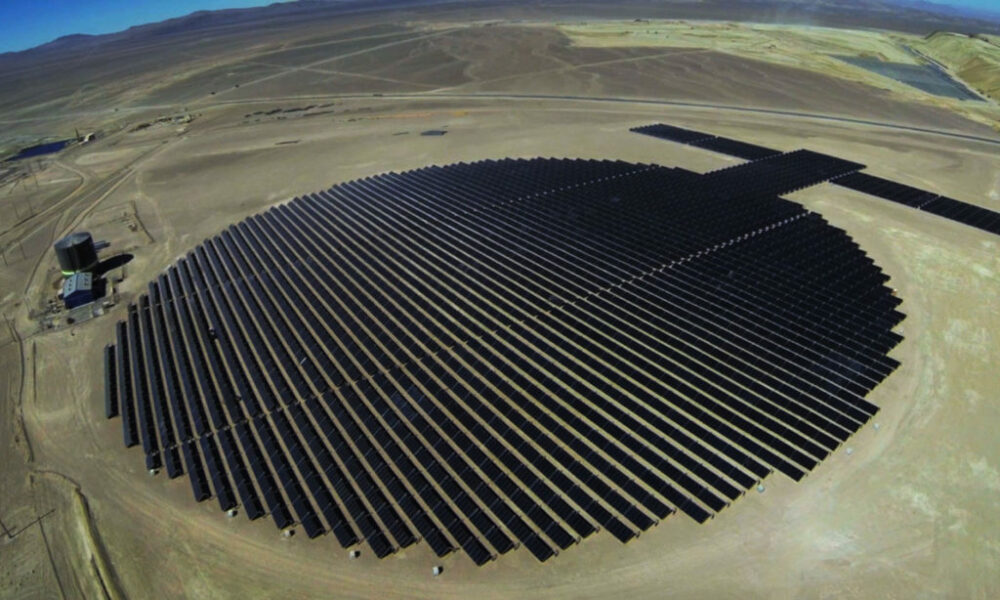
In this context, Sunmark Chile*, now Newheat Latam, set up a solar thermal plant more than 10 years ago with an installed capacity of over 30 MWth, equipped with thermal storage of more than 4,000 m³.
The plant was integrated as a source of additional heat for the electro-winning process. Today, it provides more than half of the thermal energy needed to maintain the large tanks containing the cathode plates at around 46°C.
This solution has made it possible to:
- Reduce fossil fuel consumption by more than 60%.
- Avoid the emission of more than 15,000 tCO₂/year.
- Reduce operating costs by more than 10%.
This example shows what is achievable with an average solar radiation of ~2,800 kWh/m²/year in northern Chile, reproducibility is high in other leaching sites and low- and medium-temperature processes.
*Sunmark Chile was founded by Hans Grydehoj and Ian Nelson, respectively the current managing director and technical director of Newheat Latam.
Decarbonise copper mines
The Chilean mining industry faces a major challenge: decarbonising its thermal processes in order to meet its national and international commitments, remain competitive and respond to growing demand for minerals with a low environmental footprint.
The large-scale integration of renewable heat represents one of the most significant and profitable opportunities to accelerate the energy transition of mines. With a favourable public framework, appropriate incentives and the commitment of players such as Newheat Latam, the sector can significantly reduce its carbon footprint, control its operating costs and establish itself as a world leader in “green minerals”.
At Newheat and Newheat Latam, we support the mining sector in Chile with concrete, scalable and competitive solutions, promoting sustainable mining that contributes to the economic development of the industry, the country and the protection of the planet.